
The PEACH Pit
Horses helping heal your heart and mind. Come join us at the barn.
🇺🇸 Sometimes the loudest fireworks aren’t the ones in the sky.
For many families, today is filled with laughter, cookouts, and celebration. For others, the sounds of fireworks may bring memories, emotions, or battles that are invisible to those around them.
Today, we honor our service members, veterans, military families, and first responders. Thank you for your courage, your sacrifice, and the strength you show—even on the days no one else sees.
As you celebrate this Independence Day, remember that kindness can be just as powerful as any celebration. Check in on someone. Offer grace. Listen without judgment. A simple conversation can make a lasting difference.
✨ PEACHPit Reflection:
Freedom isn’t only something we celebrate—it is something we live. May today remind us that healing takes courage, hope grows through connection, and no one should have to walk their journey alone.
From our PEACHPit family to yours, have a safe, meaningful, and Happy Fourth of July! ❤️🤍💙
#PEACHPit #FourthOfJuly #MentalHealthMatters #VeteranSupport #MilitaryFamilies #CommunityStrong #EmpowerSupportThrive
Sometimes the loudest fireworks aren’t the ones in the sky.
🇺🇸 For many families, today is filled with laughter, cookouts, and celebration. For others, the sounds of fireworks may bring memories, emotions, or battles that are invisible to those around them.Today, we honor our service members, veterans, military families, and first responders. Thank you for your courage, your sacrifice, and the strength you show—even on the days no one else sees.As you celebrate this Independence Day, remember that kindness can be just as powerful as any celebration. Check in on someone. Offer grace. Listen without judgment. A simple conversation can make a lasting difference.✨ **PEACHPit Reflection:**Freedom isn’t only something we celebrate—it is something we live. May today remind us that healing takes courage, hope grows through connection, and no one should have to walk their journey alone.From our PEACHPit family to yours, have a safe, meaningful, and Happy Fourth of July! ❤️🤍💙#PEACHPit #FourthOfJuly #MentalHealthMatters #VeteranSupport #MilitaryFamilies #CommunityStrong #EmpowerSupportThrive
Happy 4th of July
🇺🇸 Freedom Is More Than a Celebration—It’s the Freedom to Heal.
As we gather with family and friends this Fourth of July, we celebrate the freedoms that unite us as a nation. At PEACHPit, we also recognize another freedom that deserves our attention—the freedom to seek support, to prioritize mental wellness, and to know that asking for help is a sign of strength, not weakness.
Today, we extend our deepest gratitude to our active-duty service members, veterans, military families, first responders, and all who have dedicated themselves to serving others. Your courage, sacrifice, and commitment inspire us every day. We recognize that behind every uniform is a person whose mental health matters just as much as their physical health.
While fireworks light up the sky, remember that this holiday can bring mixed emotions for many. Some may experience anxiety, grief, trauma, or reminders of difficult experiences. A simple act of kindness—a phone call, a conversation, or checking in with someone you care about—can make a meaningful difference.
At PEACHPit, we believe healing happens through connection, compassion, and community. Whether you’re navigating life’s challenges, supporting a loved one, or simply looking for a place where you are seen and valued, know that you are never alone.
This Independence Day, let’s celebrate not only our nation’s freedom but also the strength found in hope, resilience, and caring for one another.
From our PEACHPit family to yours, we wish you a safe, meaningful, and joyful Fourth of July.
❤️ Check in on your people.
🤍 Be kind to yourself.
💙 Together, we grow stronger.
#HappyFourthOfJuly #MentalHealthMatters #VeteranSupport #MilitaryFamilies #CommunityHealing #Resilience #YouAreNotAlone #PEACHPit #EmpowerSupportThrive
Girl Empowerment mentorship
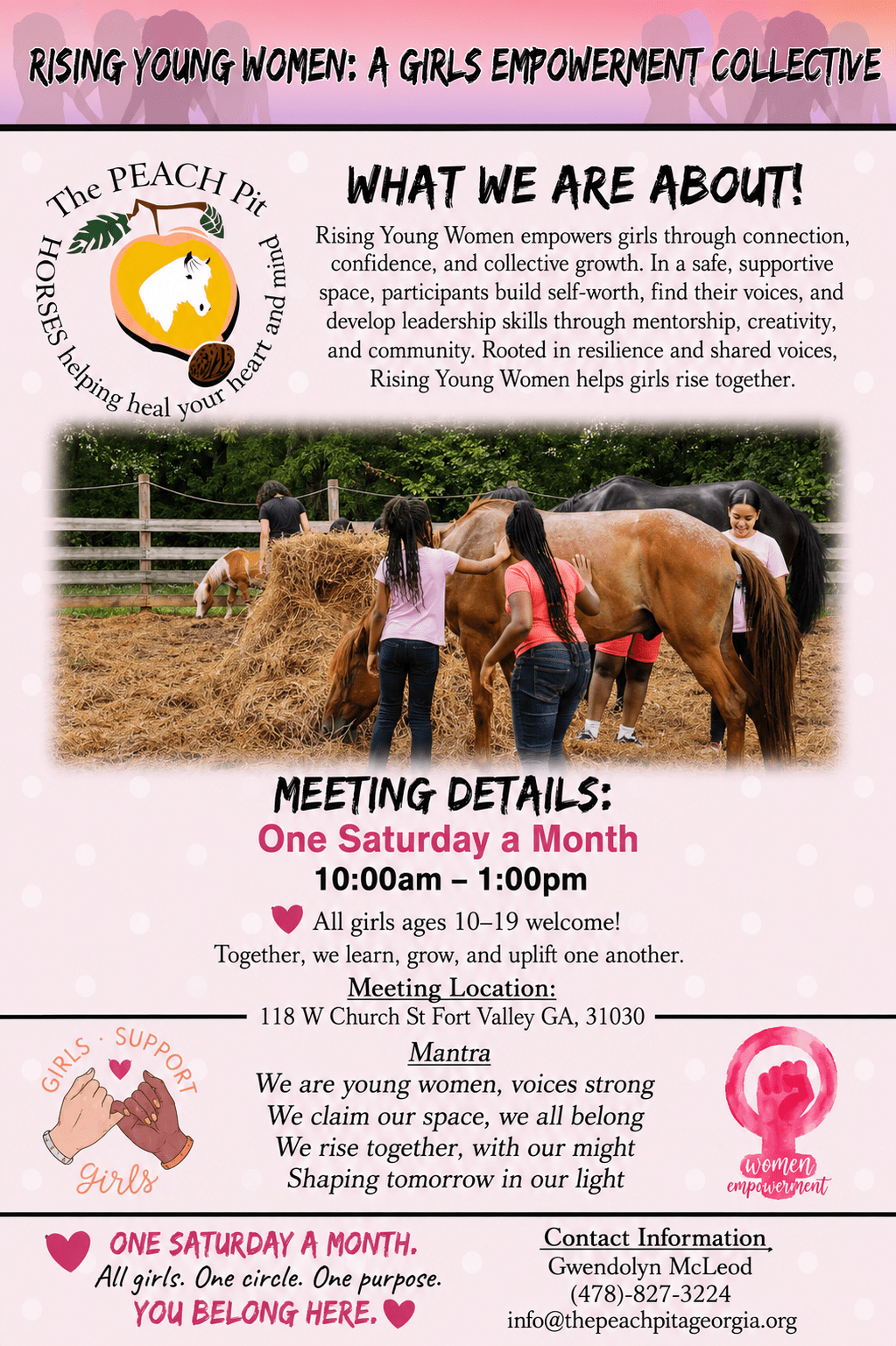
**🌸 RISING YOUNG WOMEN: A Girls Empowerment Collective 🌸**
💖 Calling all girls ages **10–19** across Middle Georgia!
Join us **ONE Saturday each month** from **10:00 AM – 1:00 PM** for a day of confidence-building, leadership, friendship, and healing through horses. Together, we’ll laugh, learn, grow, and discover the strength that’s already inside of you!
📍 **118 W. Church Street, Fort Valley, GA 31030**
🍎 **Want to support our girls?** Food, drinks, snacks, and meal donations are always appreciated to help us provide a welcoming experience for every participant. Every donation makes a difference!
📞 For more information or to donate:
**Gwendolyn McLeod**
📱 (478) 827-3224
📧 [info@thepeachpitgeorgia.org](mailto:info@thepeachpitgeorgia.org)
✨ **One Saturday. One Sisterhood. Endless Possibilities.** 💕
#RisingYoungWomen #GirlsEmpowerment #MiddleGeorgia #ThePEACHPit #HealingThroughHorses #GirlPower #CommunitySupport #EmpowerTheNextGeneration
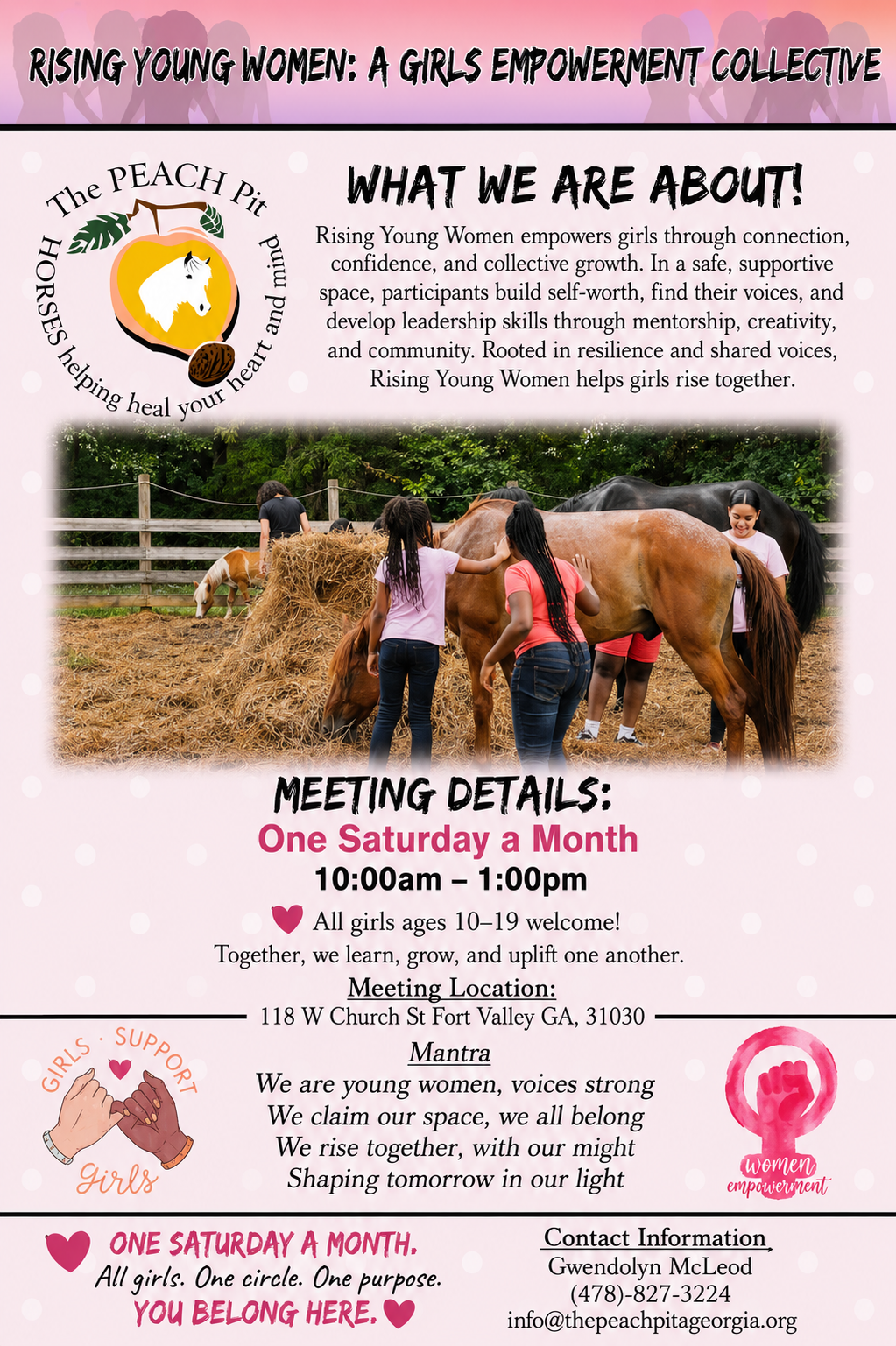
DAY 3: Growing Through Challenges
Theme: Resilience
Today was all about resilience.Sometimes growth happens when we’re willing to try something new—even when it feels difficult.Our campers worked through challenges with courage, practiced problem-solving as teams, and learned valuable lessons from our horses about patience, perseverance, and determination.Watching the girls encourage one another instead of competing reminded us that true strength comes from lifting others up.Every obstacle became an opportunity to grow.🌟 Strong girls become strong women.#PowerGirlCamp #Resilience #GirlsSupportingGirls #HealingThroughHorses #ThePEACHPit
How can I donate?


